MedicHub case study: from a brand-new domain to a citation in Google's AI Overview in 4 months

Domain Authority 1, zero backlinks, zero advertising budget. The documented SEO journey of a real product: the verifiable data, the method, and the ending you would not expect.

What medichub.it achieved in 4 months

  • Position 1 on Google

    First organic result for «marca da bollo su fatture mediche 2026» (the stamp duty on medical invoices in 2026), ahead of national tax portals such as Fiscozen, CAF ACLI and FiscoeTasse.

  • Cited in the AI Overview

    On 5 August 2026 Google's AI Overview named MedicHub among the management systems for dental practices, on a commercial search rather than an informational one.

  • First page for the product keyword

    The medichub.it homepage on the first page of a product search for dental management software (measured on 5 August 2026), in a results page held by the long-established suites of the sector.

  • 7 organic contact requests

    In 4 months, without spending a single euro on advertising. Small numbers, stated openly: that transparency is what makes this case study verifiable.

The starting point: the hardest possible setting

MedicHub is the cloud management system for dental practices developed by AraLith: a multi-dentist schedule, digital clinical records, invoicing and the Italian Health Card System (Sistema Tessera Sanitaria), plus an MCP server for connecting external assistants. A product that was actually built, in a market dominated by long-established suites with years of authority, thousands of backlinks and consolidated sales networks.

The medichub.it website started from the least favourable condition possible: a newly registered domain, Domain Authority 1, zero backlinks, zero advertising budget. No shortcuts available: only content, technical structure and continuous optimisation.

The question this case study answers: how far can you get, and how fast, with editorial and technical work alone?

What is the MedicHub MCP server?

The MedicHub MCP server is the channel through which a practice connects an external assistant of its own choice to the management system. MCP (Model Context Protocol) is an open protocol: it lets an assistant use tools made available by a piece of software, under the rules set by whoever runs that software.

The MedicHub management system does not call any model, anywhere. The MCP tools are deterministic: they receive a request, read or write data with the same checks as the management system, and reply with an outcome. Statistics and projections come out as totals already calculated by the management system.

Which tools does the MCP server expose?

The MedicHub MCP server exposes 29 tools in 4 groups, verified in the management system's code in October 2026: 21 read data, 8 create or change data.

  • Configuration and templates: 9 tools

    Forms, SMS and email templates for recall messages, the price list, the list of dentists, the tool usage guide and links to the management system's screens.

  • Scheduling: 5 tools

    Appointments, how the schedule is spread across days, time slots and dentists, searching for free slots, new appointments and proposed reschedules.

  • Administration: 9 tools

    Patient search and patient record, quotes and quote items, invoices, statistics and projections already calculated, and data export for GDPR requests.

  • Clinical data: 6 tools

    Reading the clinical diary, clinical record, prescriptions, medical history and the tooth chart with its recorded states; writing notes in the diary, marked as written by the assistant.

What safeguards does the MedicHub MCP server apply?

  • Access with OAuth 2.1

    Whoever connects the assistant signs in to MedicHub with their own account and authorises access (OAuth 2.1 with PKCE). The token is bound to the user and to their permissions, it can be revoked, and every call is kept in the log.

  • Patients as «patient N»

    The tools refer to each patient with the pseudonym «patient N» and a link to the record, protected by login. Names, contact details and free text are shown in clear only if the practice chooses so: the switches are off by default.

  • Writes confirmed in the management system

    With «Require confirmation», on by default, appointments, diary notes, forms and message templates are held until a user confirms them in MedicHub. Reschedules always wait for approval; quotes are created as drafts.

  • Tools enabled one by one

    The server and every tool are off at first installation. The practice enables individual tools with a consent recorded with user, date and time; the same permissions as the management system apply, down to individual fields.

The method, step by step

01

Cover the ground the big players ignore

Content strategy

Clusters of tax and administrative content for the dental practice: stamp duty, the Health Card System, healthcare invoicing. Real, recurring demand and weak editorial competition: the big vendors cover the product keywords, not the everyday problems of the front desk.

02

Rigorous on-page work

Structure and meta

Consistent titles, meta tags, structured data and internal links on every page, with periodic SEO audits and systematic fixes. No page published without its complete SEO profile.

03

Content that generative engines can read

Direct answers

Explicit definitions, direct answers to questions, structured FAQs: a form that generative engines can understand and cite. This is the work that led the AI Overview to name MedicHub among the solutions in the sector.

04

Measure, fix, repeat

Continuous monitoring

Search Console and search results monitored constantly: every piece of content reviewed on the basis of data, not impressions. Content that was losing positions was updated before the drop became structural.

The proof: the search results page, today

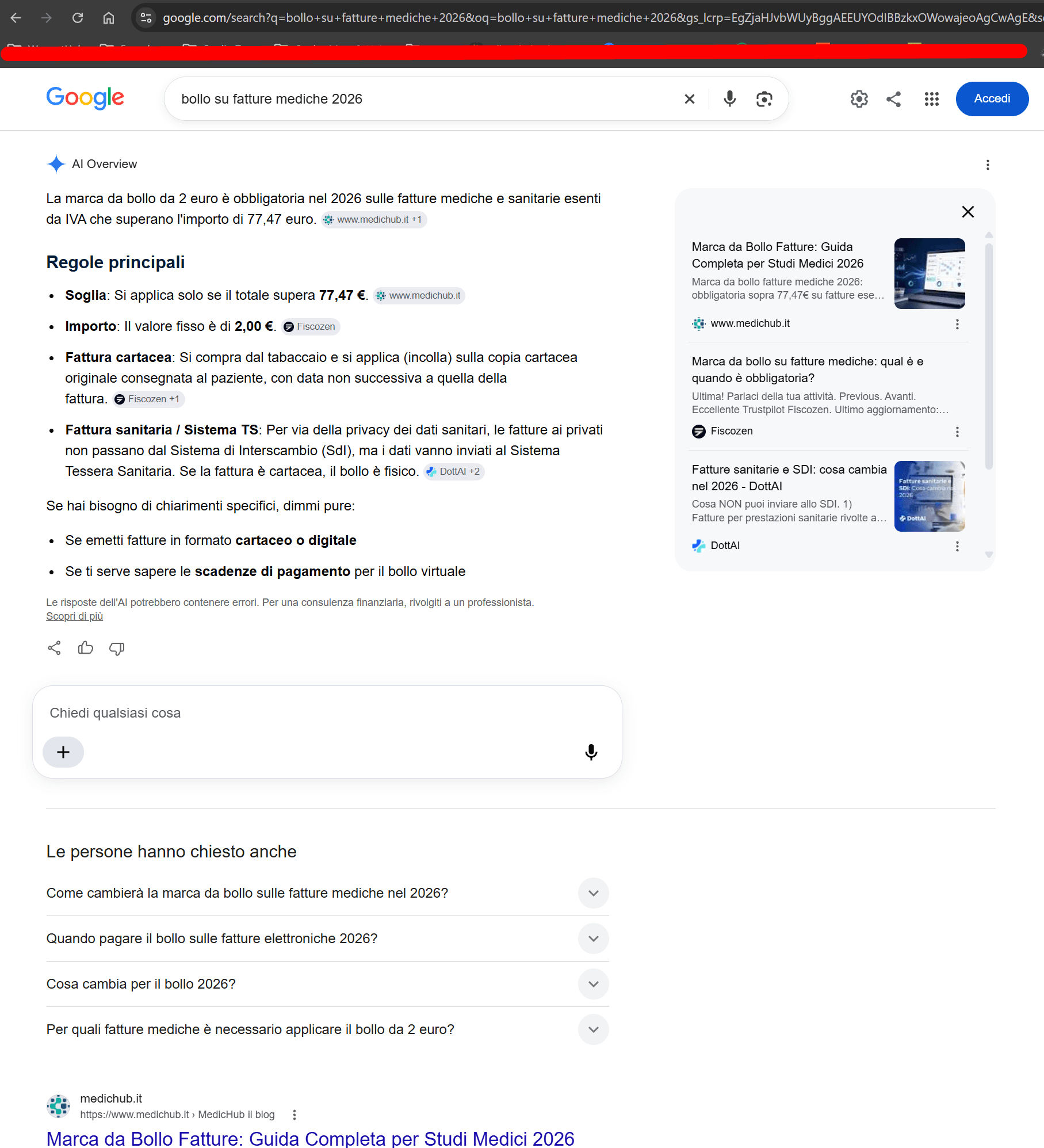
Screenshot of the Google search «bollo su fatture mediche 2026» (stamp duty on medical invoices 2026), saved on 5 August 2026: the AI Overview cites www.medichub.it as the source of the answer on the €2 stamp duty and the €77.47 threshold, and the MedicHub blog guide appears among the sources alongside it and in the organic results. These are historical data for the medichub.it website: positions may change over time.

What it cost: the receipt

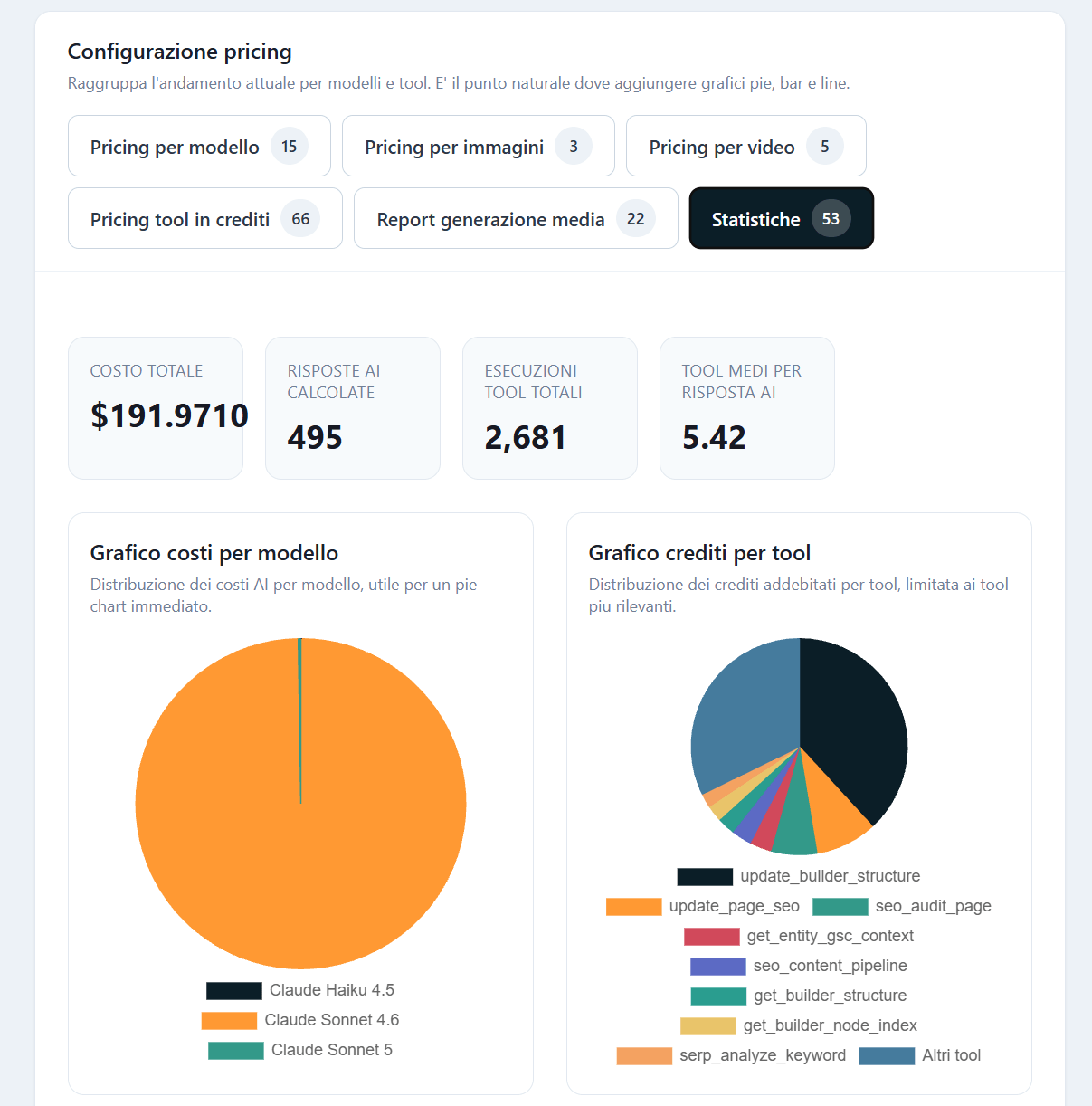
AraLith COS cost panel for medichub.it: tool executions, 52.3 million input tokens, 2.4 million output tokens, total cost of 191.97 dollars
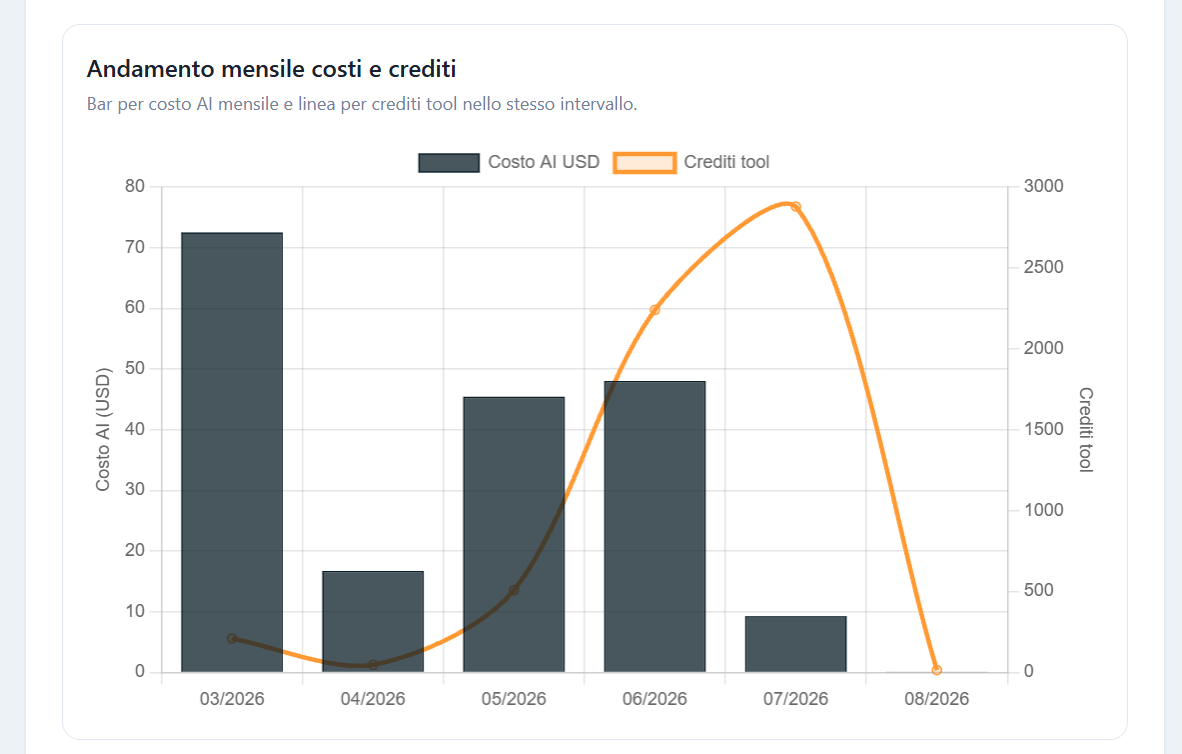
Monthly trend of API spending for generating and optimising the content of medichub.it

From the panel of AraLith COS, the platform used to build and optimise the whole website: about 2,681 tool executions, 52.3 million input tokens and 2.4 million output tokens, for a total API cost of $191.97, an average of $0.39 per response, equal to 5,897 platform credits (tools use between 1 and 6 credits). This is the entire content production investment of the project: no paid articles, no external editorial team.

And then we took it off the market

This is the paragraph no case study contains, and it is the reason you can trust the numbers above.

Organic visibility was growing, but SEO is a necessary condition, not a sufficient one. With few customers, the margins of a newly launched SaaS are small too. In healthcare, costs and regulatory responsibilities grow faster than revenue. We chose to take MedicHub off the market, and to explain publicly why.

The results documented on this page remain verifiable. The product does not. And it is exactly this transparency that sets a case study apart from a brochure.

Questions about this case study

Yes. The searches cited can be repeated on Google in a private browsing window. Organic positions can change over time, as with any search result: the screenshots document the measurements together with their date.

The principle does: identify the real question the big players do not cover and answer it better than anyone else, with a technical structure that search engines and generative engines can read and cite. Keywords and content change from sector to sector; the process does not.

Because organic visibility is not enough to make a business sustainable: the product's margins did not justify the costs and regulatory responsibilities of the healthcare sector. The full explanation is published on medichub.it (in Italian).

About 4 months from the website going live to the measurements documented on this page, with content published and optimised continuously throughout the period.

The practice chooses the assistant connected to the MedicHub MCP server, under its own contract with the assistant's provider. MedicHub only makes available the tools the practice has enabled: what a user writes in their own assistant is processing carried out by the practice with that provider, not processing by the management system.

The same method, applied to your project

A no-obligation technical call to understand where your website can grow: content, structure, visibility in the answers of generative engines.

Content created with the support of artificial intelligence.